
Placenta Beyond Beauty: Research on Menopause, Hormonal Changes, Stiff Shoulders, Joints & Lifestyle
OBARASOTAROWhen you hear the word “placenta,” you may first think of beauty care, such as maintaining skin firmness or incorporating age-conscious ingredients into your routine.
Placenta has become widely known through cosmetics and beauty-focused supplements, and it has attracted particular interest among women in their 30s, 40s and 50s.
But when you look a little deeper into placenta, a rather unexpected side of this ingredient begins to emerge.
Menopause, women’s life stages, physical symptoms involving the shoulders and knees, fatigue, oxidative stress and liver function.
Placenta-derived extracts have been studied for many years in areas that may seem, at first glance, quite separate from beauty.
In Japan, there are still pharmaceutical products made from human placenta-derived ingredients.
In addition, clinical studies in Japan and other countries have examined not only human placental extracts, but also orally consumed porcine placental extracts.
That naturally raises a number of questions:
“Why is placenta so closely associated with women?”
“Has placenta really been studied in relation to menopause?”
“Does it increase female hormones?”
“What about stiff shoulders, knees and the lower back?”
“Are there studies related to the kinds of health concerns that become more noticeable with age?”
“And what does ‘Sheep Placenta 25,000mg equivalent’ actually mean?”
In this article, we will go one step beyond the familiar idea that “placenta is popular for beauty” and explore why placenta-derived materials have been studied across such a surprisingly wide range of fields.
What Is Placenta? Why It Is About More Than Beauty
The word “placenta” originally refers to the organ formed during pregnancy.
The placenta plays a highly specialised role, helping support the exchange of oxygen, nutrients and other substances between mother and developing baby.
In the beauty and wellness world, “placenta” usually refers not to the placenta itself, but to materials produced by processing and extracting placenta-derived raw ingredients.
Placenta Is Not a Single Ingredient
This is one of the first things that makes placenta so interesting.
With vitamin C, for example, the central compound is ascorbic acid.
Placental extracts, however, are not made up of just one chemical compound.
Their composition varies depending on the source material and extraction method, but placenta-derived materials have been studied for components including:
- Amino acids
- Peptides
- Protein-derived components
- Nucleic acid-related components
- Various other trace components
In other words, placenta is a complex material that cannot easily be explained by looking at just one component.
This complexity is also an interesting point when considering why placenta has been studied from so many different perspectives, including beauty, menopause, fatigue, oxidative stress and liver function.
Human, Porcine, Equine and Sheep Placenta — The Conditions Are Not the Same
When researching placenta, you may come across terms such as:
- Human placenta
- Porcine placenta
- Equine placenta
- Sheep placenta
Although they all carry the name “placenta,” the animal source, extraction method, concentration, product classification and method of use can differ considerably.
Understanding these differences is one of the keys to reading placenta research accurately — and making it much more interesting.

What Is the Difference Between Medical Placenta Products and Sheep Placenta Supplements?
When searching for information about placenta, you may come across statements such as:
“Placenta is also used in medical care for menopause.”
“It is also used in areas related to liver function.”
In fact, Japan does have medical placenta products made from human placenta-derived ingredients.
Japan Has Two Well-Known Medical Placenta Products
Two representative products are Melsmon and Laennec.
Both are human placenta-derived pharmaceuticals, but their approved indications in Japan are different.
| Medical Product | Source | Approved Indications in Japan |
|---|---|---|
| Melsmon | Human placenta-derived | Menopausal disorders, insufficient lactation |
| Laennec | Human placenta-derived | Improvement of liver function in chronic liver disease |
If you tend to think of placenta mainly as a beauty ingredient, it may be a little surprising that medical placenta products exist in two very different areas: menopause and liver function.
This fact alone shows that placenta-derived materials have been studied far beyond the field of beauty.
Medical Placenta and Supplements Have Different Roles
This is an important point to understand early when learning about placenta.
Medical human placenta products and sheep placenta supplements differ in source, classification, method of use and positioning.
| Medical Placenta | Sheep Placenta Supplement | |
|---|---|---|
| Main Source | Human placenta-derived | Sheep placenta-derived |
| Classification | Pharmaceutical | Food / dietary supplement |
| How It Is Used | Used in medical settings | Consumed as a food supplement |
| Positioning | Used within approved indications | Included as part of daily beauty and wellness habits |
Research and approved indications for medical placenta products are therefore valuable for understanding the types of fields in which placenta-derived materials have been investigated.
Commercial sheep placenta supplements, on the other hand, should be considered according to the characteristics of the sheep-derived food product itself rather than by simply transferring findings from medical or clinical research.
When Reading Placenta Research, Check the Source, Method and Outcome
Whenever you come across a placenta study, look at three things:
- What type of placenta was used?
- Was it injected, taken orally or used in another way?
- What exactly did the researchers measure?
These three questions make the research much easier to understand.
For example, a study in which participants swallowed porcine placental extract is quite different from one involving injections of a human placenta-derived medical product.
With that distinction in mind, let us take a closer look at some of the research.

Menopause & Women’s Changes | The Real Relationship Between Placenta and Hormones
One of the most interesting areas of placenta research for women is menopause.
From the 40s into the 50s, ovarian function changes and oestrogen levels fluctuate considerably before gradually declining.
During this stage of life, women may notice changes such as:
- Hot flushes and sweating
- Changes in sleep
- Changes in mood
- Feeling more easily fatigued
- Discomfort around the shoulders or lower back
- Changes in how the joints feel
A wide range of physical and emotional changes may therefore appear during this period.
Placenta and Menopause Have Actually Been Studied Clinically
In 2009, a randomised, double-blind, placebo-controlled study compared human placental extract with placebo in 108 women experiencing menopausal symptoms.
The participants were followed for four weeks using the Kupperman Index, a scale used to assess menopausal symptoms.
Later studies also investigated oral porcine placental extract, rather than injections alone.
The Interesting Part: One Study Was Not Simply About Hormone Levels
In 2017, a randomised, double-blind, placebo-controlled study involving 50 Japanese women examined oral intake of 300mg of porcine placental extract per day for 12 weeks.
The study used the Simplified Menopausal Index (SMI) to evaluate menopausal symptoms.
After 12 weeks, a difference in total SMI scores was reported between the placental extract group and the placebo group.
At this point, you might think, “So perhaps it simply changed hormone levels?”
But the study contained another interesting finding.
No clear changes were identified in estradiol (E2) or FSH.
This means the study cannot be explained simply as:
“Take placenta → female hormone levels increase.”
A more interesting way to understand the research is:
“The relationship between placental extracts and changes during women’s life stages may not be explained by hormone levels alone, which is why the subject continues to be studied from multiple perspectives.”
Seen this way, placenta research becomes much more interesting.
The Research Is Not Limited to Hot Flushes
When people think about menopause research, they may picture only hot flushes or sweating.
In reality, studies have examined a much broader range of areas, including:
- Vasomotor symptoms
- Sleep
- Mood
- Fatigue
- Physical symptoms involving the shoulders and joints
- Skin-related parameters
In 2025, a systematic review bringing together 11 randomised controlled trials (RCTs) involving placental extracts and menopausal symptoms was also published.
The review examined studies using human or porcine placental extracts and organised findings relating to menopausal symptoms, physical symptoms, vasomotor symptoms, psychological measures and skin-related parameters.
So when we ask why placenta has become so closely associated with women, the answer lies not only in its beauty image, but also in a long history of research involving women’s life stages.

Stiff Shoulders, Knees & Lower Back | Have Muscles and Joints Been Studied Too?
If you have known about placenta for some time, you may have heard comments such as:
“I’ve heard placenta is also used in relation to stiff shoulders.”
“I’ve heard it may be connected with knees and joints.”
In fact, clinical studies have examined placental extracts in relation to physical symptoms involving muscles and joints.
A Study Looking at Stiff Shoulders in Menopausal Women
In 2013, a randomised comparative study investigated oral porcine placental extract in menopausal women with stiff shoulders.
The study involved 66 climacteric women with shoulder stiffness and 54 postmenopausal women whose shoulder stiffness persisted despite hormone therapy.
Shoulder stiffness was evaluated using a Visual Analog Scale (VAS), and differences between the porcine placental extract groups and comparison groups were examined.
What this tells us is that the combination of “placenta and shoulder symptoms” has genuinely been the subject of clinical research.
Knee Pain Has Also Been Studied
In 2012, another randomised comparative study investigated oral porcine placental extract and knee pain in 48 postmenopausal women receiving hormone therapy.
Knee pain was assessed by VAS at 4, 8 and 12 weeks, and the porcine placental extract group was compared with a control group.
At first glance, “menopause” and “joints” may seem like completely separate concerns.
But when women’s life stages are studied, research may look not only at hot flushes or sleep, but also at broader physical changes involving muscles and joints.
That is another fascinating aspect of placenta research.
What About Lower Back Pain?
Lower back pain is especially complex because many different factors can contribute to it.
These may include:
- Long periods of desk work
- Remaining in the same position for long periods
- Muscular strain
- Lack of physical activity
- Changes involving discs or joints
- Nerve-related factors
- Sleep and stress
Rather than thinking of placenta and lower back pain as a simple one-to-one relationship, it is more useful to understand that placental extracts have been studied in connection with musculoskeletal physical symptoms, including those involving the shoulders and knees.
In the 40s and 50s especially, several changes may be noticed at the same time:
“My shoulders feel different from before.”
“My knees or lower back have started to bother me.”
“I seem to tire more easily.”
“My sleep is not quite the same.”
Looking at placenta research as an exploration of a broader range of physical changes associated with age and women’s life stages, rather than focusing on a single symptom, makes its scope much easier to understand.
If you experience severe lower back pain, swollen joints, numbness in the arms or legs, muscle weakness, or pain that persists at night, seek medical advice to identify the underlying cause.

Lifestyle Habits & Placenta Research | Why Do Oxidative Stress and Liver Function Also Appear?
In the 40s and 50s, many people begin paying attention not only to beauty, but also to the numbers that appear in health checks.
Blood pressure, blood glucose, lipids, body weight and liver function.
Older information about placenta sometimes grouped these topics together with broad statements about “lifestyle-related diseases.”
Today, looking at the research in more detail makes the subject much more interesting.
Why have placental extracts been studied in broader areas of health?
One of the clues is a research theme known as oxidative stress.
What Is Oxidative Stress?
Reactive oxygen species are naturally produced during normal metabolism.
They also have necessary biological roles, but when the balance between their production and the body’s antioxidant defences becomes significantly disrupted, the condition is referred to as oxidative stress.
Oxidative stress is studied in relation to ageing and many different aspects of physical health.
Research Asking: What Is Actually Inside Placental Extract?
In 2002, researchers isolated substances showing antioxidant activity from human placental extract, identifying L-tryptophan as one of them.
Research like this asks:
“What components are present in this complex placental extract, and what properties do they have?”
It is the kind of work that examines each part of a complicated biological material step by step.
Researchers are therefore looking at placenta from quite a different perspective from the familiar image of a beauty supplement.
NRF2, a System Involved in the Cellular Stress Response, Has Also Been Studied
In 2022, a laboratory study using normal human dermal fibroblasts investigated the relationship between human placental extract and NRF2.
NRF2 is part of an important cellular response system associated with oxidative stress.
Under oxidative-stress conditions, researchers examined antioxidant-related genes, NRF2 protein and related parameters.
It is quite interesting to see an ingredient so well known in beauty being studied in relation to how cells respond to stressful conditions.
Looking at research from this angle helps explain why placenta has remained a subject of scientific interest for so long.
Liver Function Is Another Major Area of Placenta Research
One particularly interesting area is liver function.
As mentioned earlier, the Japanese medical human placenta product Laennec is approved for improvement of liver function in chronic liver disease.
Research outside Japan has also evaluated human placental extract in patients with alcoholic and non-alcoholic steatohepatitis in randomised comparative studies.
So when the research trail is followed,
Beauty → Menopause → Muscles & Joints → Oxidative Stress → Liver Function
we begin to see just how widely placenta-derived materials have been investigated.
Daily Lifestyle Still Comes First
When thinking about blood pressure, blood glucose, lipids or body weight, the fundamentals include:
- Diet
- Physical activity
- Sleep
- Maintaining an appropriate body weight
- Alcohol habits
- Smoking
- Regular health checks
These everyday habits remain the foundation.
Against that background, placenta can be understood as a material whose research has expanded beyond beauty into subjects such as oxidative stress and liver function, offering an interesting perspective on its history and scientific study.
How to Read Sheep Placenta Product Labels | What Does “25,000mg Equivalent” Mean?
So far, we have looked at research involving human placenta-derived medical products, human placental extracts and porcine placental extracts.
Now let us move away from research for a moment and look at what to check on a sheep placenta supplement label.
For sheep placenta supplements sold as foods, useful points to examine include the source material, actual amount, concentration ratio, manufacturing method, quality control and ease of continued use.
Do You Know What “25,000mg Equivalent” Actually Means?
This is a very useful point to understand when comparing placenta supplements.
For HealthLife NZ Sheep Placenta 25,000mg, available from Brilliant Life Products NZ, the current label states that each capsule contains:
Sheep Placenta Powder 100:1 — 250mg
= equivalent to 25,000mg of sheep placenta raw material
You may be wondering:
“Wait... does one capsule really contain 25,000mg?”
25,000mg is 25 grams.
For comparison, the entire capsule weighs 1,450mg, or 1.45g.
That means 25g is roughly 17 times the weight of the entire capsule.
If someone actually tried to fit 25g of placenta powder into one capsule, it would have to be enormous.
At that point, it would be less like a supplement and more like a small meal.
Of course, that is not what the label means.
The product contains 250mg of sheep placenta powder at a 100:1 concentration, equivalent to 25,000mg of the original raw material.
In other words:
Actual sheep placenta powder: 250mg
Raw-material equivalent: 25,000mg
Understanding the difference between the actual amount of concentrated powder and the raw-material equivalent makes placenta supplement labels much easier to interpret.
It also means that when comparing products, you can look beyond the headline number and check the concentration ratio and actual amount of material used.
Also Combined with 2,000mg Equivalent of Grape Seed
This product contains not only sheep placenta but also grape seed extract.
According to the current label:
Dry concentrated grape seed extract 16.67mg
= equivalent to 2,000mg of grape seed raw material
The formula therefore combines a sheep-derived ingredient and a plant-derived grape seed ingredient in one capsule.
New Zealand-Sourced Material & Freeze-Enzyme Extraction
HealthLife NZ Sheep Placenta 25,000mg uses sheep placenta sourced from New Zealand.
The product also uses a freeze-enzyme extraction method.
This method combines a freezing process with enzyme-assisted extraction to process the raw material.
Product features include:
- New Zealand-sourced sheep placenta
- 25,000mg sheep placenta raw-material equivalent per capsule
- 2,000mg grape seed raw-material equivalent per capsule
- 100 capsules
- Suggested use: 1 capsule daily
- Freeze-enzyme extraction method
- Manufactured in a GMP-approved facility
For someone who becomes interested in placenta after reading about the research, the next step can simply be to look at practical product details such as source, concentration ratio, manufacturing process, quality control and ease of use.
That approach makes it easier to understand what you are actually choosing, rather than selecting a product simply because “25,000mg sounds impressive.”
View HealthLife NZ Sheep Placenta 25,000mg →
What to Know Before You Finish Researching Placenta
People begin researching placenta for many different reasons.
“My beauty needs seem to be changing with age.”
“I’m entering the menopausal stage of life.”
“My shoulders, knees or lower back feel different from before.”
“I seem to tire differently these days.”
“I’ve started paying more attention to my health checks.”
Concerns like these may be what first lead someone to the word “placenta.”
And as the research is explored, the same word appears across a surprisingly broad range of topics:
Beauty.
Women’s life stages.
Menopause.
Physical symptoms involving the shoulders and joints.
Oxidative stress.
Liver function.
That may be the most interesting thing about placenta as a research subject.
One especially fascinating point is that some of the research cannot be explained simply by saying “placenta increases female hormones.”
It may also be surprising to people who know placenta only as a beauty ingredient that physical symptoms involving the shoulders and knees have also been investigated.
When choosing a sheep placenta product for everyday use, it is useful to treat that research as background knowledge about placenta as a material, rather than as proof of effects from the supplement itself.
A practical way to think about it is:
“I am interested in placenta because it has been studied across many fields, and I am choosing a sheep-derived food supplement as one part of my own beauty and wellness routine.”
Daily fundamentals such as nutrition, physical activity and sleep still matter.
And once you understand the source material and manufacturing process, you can choose something that fits comfortably into your routine.
Not simply “because it is a beauty ingredient,” but because you want to understand what is inside the product before choosing it.
For people who think that way, placenta may be one of those ingredients that becomes more interesting the more you learn about it.
※ This article provides general information about placenta and placenta research. It is not intended to diagnose, treat or prevent disease.
※ Medical human placenta products and sheep placenta supplements sold as foods differ in their source materials, classification, method of use and purpose. Follow your healthcare professional’s instructions when using medical products.
※ If you have severe lower back or joint pain, menstrual abnormalities, troublesome menopausal symptoms, or concerns about blood pressure, blood glucose or blood lipids, consult an appropriate healthcare professional.
※ If you are pregnant or breastfeeding, under medical care, or taking medicines, consult a doctor, pharmacist or other qualified healthcare professional as appropriate before using supplements.
References
- Pharmaceuticals and Medical Devices Agency (PMDA), Melsmon prescribing information.
- Pharmaceuticals and Medical Devices Agency (PMDA), Laennec prescribing information.
- Lee YK, et al. Efficacy and safety of human placenta extract in alleviating climacteric symptoms: prospective, randomized, double-blind, placebo-controlled trial. J Obstet Gynaecol Res. 2009.
- Kitanohara M, et al. Effect of porcine placental extract on the mild menopausal symptoms of climacteric women. Climacteric. 2017.
- Lee JY, et al. Effect of porcine placental extract on menopausal symptoms in postmenopausal women: a prospective, randomized, double-blind, placebo-controlled trial. Taiwan J Obstet Gynecol. 2020.
- Papp S, et al. Efficacy and Safety of Placental Extract on Menopausal Symptoms: A Systematic Review. Nutrients. 2025.
- Koike K, et al. Efficacy of porcine placental extract on shoulder stiffness in climacteric women. Climacteric. 2013.
- Koike K, et al. Efficacy of porcine placental extracts with hormone therapy for postmenopausal women with knee pain. Climacteric. 2012.
- Watanabe S, et al. L-tryptophan as an antioxidant in human placenta extract. J Nutr Sci Vitaminol. 2002.
- Huang L, et al. Human Placental Extract Delays In Vitro Cellular Senescence through the Activation of NRF2-Mediated Antioxidant Pathway. Antioxidants. 2022.
- Choi JY, et al. Efficacy and safety of human placental extract for alcoholic and nonalcoholic steatohepatitis: an open-label, randomized, comparative study. Biol Pharm Bull. 2014.
Featured Product

Recommended Products
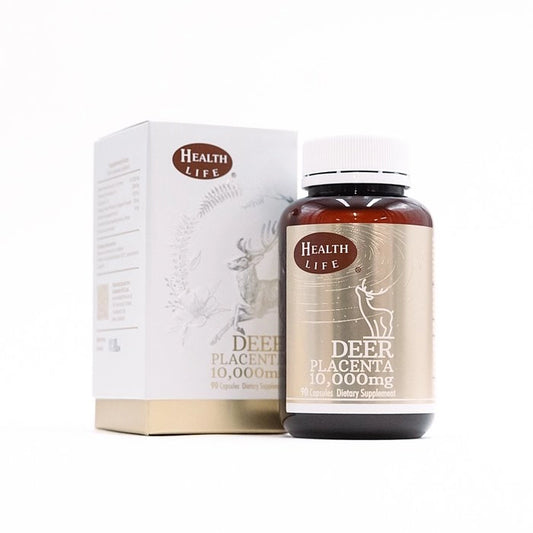
Health Life NZ Deer Placenta Extract (Deer-Derived) 10,000mg
NZ Deer & Sheep Placenta Set | Dual Support for Beauty & Daily Wellness

Placenta Face Cream 100g | NZ Lanolin Premium Skincare – LANOCREME
Related Articles

What Is Gout? Causes, Symptoms, Uric Acid Levels, Diet & Lifestyle Explained

Why Is It Harder to Lose Weight in Your 40s and 50s? Menopause, Belly Fat, Gut Health & Healthy Weight Management

Menopause, Low Mood and Irritability: Understanding the Difference from Depression
Latest Articles

Metabolism vs Basal Metabolic Rate: Fat Burning, Age, Muscle & Skin Turnover

What Is Manuka Honey? UMF, MGO, How to Choose & Enjoy
