
Chamomile Tea Benefits: Bedtime, Beauty, Caffeine & Side Effects Explained
OBARASOTAROComplete Guide to Chamomile Tea: Benefits, Bedtime, Beauty, Caffeine & Side Effects
Take a moment to unwind, surrounded by the gentle, naturally sweet aroma of chamomile.
Known and enjoyed around the world for generations, chamomile is one of the most popular herbs for creating a calm and relaxing tea time.
Even if you have never tried chamomile tea before, you may already associate it with “a herbal tea to enjoy before bed” or “a soothing tea for winding down at the end of the day.”
But you may also have questions such as:
- What are the potential benefits of chamomile tea?
- Can I drink chamomile tea before bed?
- Is it okay to drink chamomile tea every day?
- Does chamomile tea contain caffeine?
- What is the connection between chamomile and beauty or skincare?
- Are there any side effects or precautions to be aware of?
In this complete guide, we explore chamomile in detail—from its characteristics and long history to its place in relaxing bedtime routines, its connection with beauty and skincare, delicious ways to prepare it, and important precautions to consider if you enjoy it regularly.
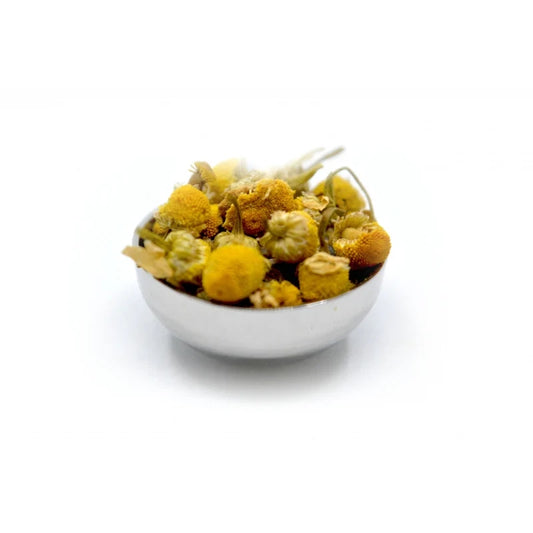
If you would like to experience the natural aroma and flavour of pure chamomile, take a look at Tea Total Pure Egyptian Chamomile Tea 45g.

What Is Chamomile? A Herb Loved Around the World
Chamomile is a member of the daisy family (Asteraceae), easily recognised by its delicate white petals and bright yellow centres.
Its small, daisy-like flowers give the plant its charming appearance, and it is primarily the flowers that are used to make chamomile tea.
Two of the best-known varieties are German chamomile and Roman chamomile.
Although both are commonly referred to as “chamomile,” they have different characteristics. German chamomile is one of the varieties most widely enjoyed as a herbal tea, while Roman chamomile has a stronger aroma and is also commonly used in aromatherapy and other applications.
Why Is Chamomile Called the “Apple of the Ground”?
One of chamomile’s most distinctive qualities is its aroma.
Pour hot water over the flowers and a gentle, naturally sweet fragrance begins to rise from the cup—often compared to the scent of fresh apples.
In fact, the name “chamomile” is believed to originate from Greek words meaning “apple of the ground” or “ground apple.”
Its fragrance is neither overpowering nor overly floral. Instead, it is soft and subtly sweet, making chamomile a lovely choice when you want to shift gears after a busy day or simply enjoy a quiet moment between work, household tasks, or other daily activities.
What Does Chamomile Tea Taste Like?
If you think herbal teas might be too strong or unusual for your taste, chamomile is one of the more approachable varieties to try.
Its aroma has a gentle apple-like sweetness, while the flavour itself is mild, with subtle green, botanical notes and a hint of natural sweetness.
You can enjoy it simply on its own, or pair it with honey, fresh apple, or dried apple depending on your mood.
Chamomile Has Been Part of Everyday Life for Centuries
Chamomile has a long history of use around the world.
It has been enjoyed for centuries across Europe and many other regions, not only as a drink but as a versatile herb used in everyday life.
In Japan, chamomile is also traditionally known as kamitsure.
Today, chamomile is found not only in herbal teas but also in a variety of skincare and cosmetic products containing chamomile-derived ingredients, making this traditional herb very much a part of modern life as well.

What Are the Benefits of Chamomile Tea? Why Is It Popular for Relaxation?
“What are the benefits of chamomile tea?”
This is probably one of the first questions that comes to mind when learning more about chamomile.
Chamomile has been used in many parts of the world for centuries, and today it remains especially popular as a herbal tea to enjoy during relaxing moments and at the end of the day.
Chamomile has also been the subject of various studies exploring its aroma and its relationship with sleep, relaxation, and emotional wellbeing.
However, chamomile tea is a food and beverage, not a medicine. It should not be considered a treatment for insomnia or other medical conditions. Rather than expecting medicinal effects, chamomile tea is best enjoyed as part of everyday life—a simple way to appreciate its gentle aroma and flavour while creating a little time to unwind.
Why Is Chamomile Known as a Relaxing Herb?
One reason may simply be chamomile’s distinctive, gentle fragrance.
The moment hot water is poured over the flowers, a soft, sweet aroma reminiscent of apples begins to fill the air.
Preparing a warm cup of chamomile tea after a busy day and slowly enjoying its aroma and flavour can become a simple ritual for transitioning from a busy “on” mode into a quieter part of the evening.
Research has also explored various aspects of chamomile consumption, including autonomic nervous system activity and emotional responses. However, research findings do not necessarily apply in the same way to every individual.
Rather than thinking of chamomile as something that will “make you relax,” consider enjoying the experience itself—the aroma, the warmth of the cup, and a few quiet moments to yourself.
Apigenin: A Naturally Occurring Compound in Chamomile
One of the naturally occurring plant compounds commonly associated with chamomile is apigenin.
Apigenin is a type of flavonoid found in a variety of plants, including chamomile. It is among the plant compounds that have been studied when researchers investigate chamomile in relation to sleep and relaxation.
However, research into an individual compound is not the same as demonstrating that an ordinary cup of chamomile tea will produce medicine-like effects.
When enjoying chamomile tea as a beverage, there is no need to focus on one particular compound. Its gentle aroma, flavour, and the simple pleasure of tea time are all part of the experience.
Is Chamomile Tea Good Before Bed? Does It Contain Caffeine?
Chamomile tea is widely known as a herbal tea to enjoy before bed.
One of the reasons is that chamomile itself is naturally caffeine-free.
Coffee, black tea, and green tea all naturally contain caffeine, so many people prefer to limit their intake later in the day.
A single-herb tea made purely from chamomile can therefore be an appealing choice when you want to avoid caffeine in the evening.
However, some products labelled “chamomile tea” may be blended with black tea, green tea, or other ingredients that contain caffeine. If you are specifically trying to avoid caffeine, always check the ingredients before choosing a tea.
How Long Before Bed Should You Drink Chamomile Tea?
Chamomile tea is not a sleeping medicine, so there is no specific rule such as “drink it a certain number of minutes before bed” to achieve a particular effect.
Rather than focusing on an exact time, try enjoying it during a quiet part of your evening when you naturally begin to wind down—perhaps after a bath or shower, while reading a book, or simply while relaxing at home.
Dim the lights, put your phone or computer aside for a while, and slowly enjoy a warm cup of chamomile tea.
Making this part of your evening routine can be a lovely way to create a little time for yourself at the end of the day.
Keep in mind that drinking a large amount of any liquid immediately before going to bed may mean waking during the night to use the bathroom. If this is something that concerns you, simply adjust the amount you drink and the timing to suit your own routine.
Can You Drink Chamomile Tea Every Day?
Chamomile has been enjoyed as a beverage in many parts of the world for centuries.
When drinking it as part of your everyday routine, the basic approach is the same as with other teas: enjoy a moderate amount rather than consuming excessive quantities at once.
However, some people may need to take additional care, including those with allergies to plants in the daisy family, people who are pregnant or breastfeeding, and those taking certain medications. We cover these points in more detail later in the section on side effects and precautions.
Chamomile and Beauty: Plant Compounds Used in Skincare
Chamomile may be best known as a herbal tea to enjoy before bed, but the plant is also well known in the world of beauty and skincare.
If you check the ingredient lists on toners, serums, creams, and other skincare products, you may have come across ingredients such as chamomile flower extract or bisabolol.
This does not mean that drinking chamomile tea will treat skin concerns. Instead, let’s look at why chamomile as a plant has attracted interest in the beauty and skincare industry.
Chamazulene
When researching chamomile, you may come across a compound called chamazulene.
Chamazulene is particularly associated with German chamomile essential oil. Research into compounds such as this is one of the reasons chamomile-derived ingredients have attracted attention in skincare and cosmetic applications.
α-Bisabolol
Another interesting compound associated with chamomile is α-bisabolol.
α-Bisabolol may also appear simply as “bisabolol” or “levomenol,” and it is used as an ingredient in a variety of skincare and cosmetic products.
The next time you look at the ingredient list on one of your skincare products, you might find it interesting to check for names such as “bisabolol” or “chamomile flower extract.”
Guaiazulene
Guaiazulene is an azulene-related compound known for its distinctive blue colour. It has been used in fields including cosmetics and pharmaceuticals.
Research has also been conducted on skincare products and other formulations containing guaiazulene.
However, it is important to distinguish between research involving a product formulated with guaiazulene and research into drinking chamomile tea. They are not the same thing.
In other words, research findings relating to a specific compound do not automatically demonstrate beauty benefits from drinking chamomile tea.
Does Drinking Chamomile Tea Improve Your Skin?
Chamomile tea is neither a medicine nor a cosmetic product, so it would not be appropriate to assume that drinking it will treat acne, dry skin, irritation, or other skin concerns.
The condition of our skin can be influenced by many different factors, including sleep, diet, sun exposure, dryness, stress, hormonal changes, and our daily skincare routine.
If beauty and skincare are important to you, consider chamomile tea not as a drink for “treating” skin problems, but simply as a caffeine-free option for your evening tea time or a gentle cup to enjoy during a little time for yourself.
Can You Apply Brewed Chamomile Tea Directly to Your Skin?
Because chamomile-derived ingredients are used in cosmetics, you may wonder whether you can simply apply brewed chamomile tea directly to your skin.
However, herbal tea intended for drinking is not manufactured or formulated as a skincare product.
Freshly brewed herbal tea also does not contain the preservation systems used in properly formulated cosmetics, which means hygiene and storage may become an issue.
If you would like to incorporate chamomile into your skincare routine, it is better to choose a cosmetic product specifically formulated for use on the skin and follow the manufacturer’s directions.
Can You Enjoy Chamomile Tea After a Meal?
Chamomile is not only associated with bedtime. It has also traditionally been enjoyed after meals.
Coffee and black tea are popular after-dinner drinks, but both naturally contain caffeine.
If you would still like something warm after dinner but prefer to limit caffeine in the evening, chamomile tea can be a pleasant alternative.
Chamomile Tea Even Appears in The Tale of Peter Rabbit
One charming example of chamomile’s long association with everyday life can be found in the famous British children’s book The Tale of Peter Rabbit.
After Peter returns home from Mr. McGregor’s garden, his mother gives him chamomile tea in the evening.
The fact that chamomile tea appears so naturally in a story first published more than a century ago gives us a glimpse of just how familiar the herb was in everyday British life at the time.
However, chamomile tea is not a medicine for treating gastritis, stomach pain, diarrhoea, or other digestive conditions. If digestive symptoms continue or are causing concern, it is important to seek appropriate medical advice rather than relying on herbal tea alone.

How to Make Delicious Chamomile Tea
Chamomile is a versatile herbal tea that can be enjoyed both hot and iced.
If you are new to chamomile, start by drinking it on its own so you can appreciate its natural aroma and flavour. Once you are familiar with it, try adding honey, apple, mint, or other ingredients to create your own favourite combination.
Classic Hot Chamomile Tea
For the purest expression of chamomile’s natural aroma and flavour, start with a simple cup of hot chamomile tea.
Place the chamomile flowers in a teapot or infuser and pour over freshly boiled water.
As the tea infuses, take a moment to enjoy the gentle, apple-like aroma released from the flowers.
Try your first sip without adding anything. You can then add a little honey if you prefer a touch of extra sweetness.
Chamomile Tea with Honey
If you prefer your chamomile tea a little sweeter, honey is a wonderful addition.
Chamomile’s gentle aroma pairs beautifully with the smooth, mellow sweetness of honey.
Rather than adding too much at once, start with a small amount and gradually adjust it until you find the sweetness you enjoy.
Please note: Honey should not be given to infants under 12 months of age.
Chamomile Tea with Apple
One combination we particularly recommend is chamomile and apple.
Because chamomile itself has an aroma often compared to apples, it pairs naturally with both fresh and dried apple.
- Infuse thin slices of fresh apple together with the chamomile.
- Add dried apple to freshly brewed chamomile tea.
- Add a small amount of apple juice.
- Combine apple and honey for a naturally sweeter variation.
This is also a lovely option for anyone who finds the distinctive herbal flavour of plain chamomile a little unfamiliar at first.
Add Lemon for a Refreshing Twist
If you prefer something brighter and more refreshing, try adding a small amount of lemon.
The fresh citrus character complements chamomile’s gentle aroma and works particularly well in iced chamomile tea.
Try Iced Chamomile Tea in Warmer Weather
Chamomile may often be associated with a warm, comforting cup of herbal tea, but it can also be enjoyed chilled during the warmer months.
How to Make Cold-Brew Chamomile Tea
For approximately one serving:
- Chamomile: approximately 1–1.5 teaspoons
- Water: 200ml
- Ice: as desired
- Place the chamomile and water in a clean teapot, bottle, or suitable container.
- Place it in the refrigerator and allow it to infuse slowly for at least 3 hours.
- Strain out the chamomile flowers and pour the tea over ice.
You can also prepare it before going to bed, leave it to infuse in the refrigerator overnight, and enjoy it the following day.
Add Mint for an Extra Refreshing Flavour
If you would like an even fresher taste, try adding a small amount of mint.
The refreshing aroma of mint creates an interesting contrast with chamomile’s gentle, naturally sweet fragrance, giving the tea a different character from plain chamomile.
Mint has a stronger aroma than chamomile, so start with only a small amount to avoid overpowering the delicate flavour of the flowers.

Does Chamomile Tea Have Side Effects? Who Should Take Extra Care?
Chamomile has been enjoyed as a herbal tea for generations, but the fact that something is natural does not necessarily mean that it is suitable for everyone.
Chamomile is generally considered safe when consumed in the amounts commonly found in tea and foods. However, some people may need to take additional care depending on their individual health, allergies, or medications.
People with Allergies to the Daisy Family
Chamomile belongs to the Asteraceae family, also known as the daisy family.
People who are allergic to related plants such as ragweed, chrysanthemums, marigolds, or daisies may also have an allergic reaction to chamomile.
If you have an allergy to plants in the daisy family or have previously experienced an allergic reaction to herbal products, consider speaking with an appropriate healthcare professional before drinking chamomile tea.
Is Chamomile Tea Bad for Your Liver?
If you search for information about chamomile online, you may come across questions such as “Is chamomile tea bad for your liver?”
Chamomile consumed in the amounts commonly found in tea should not simply be regarded as a drink that is “bad for the liver.”
However, interactions between chamomile and certain medications have been reported.
It is important to understand that a potential interaction with medicines that are processed by the body is not the same thing as saying that chamomile tea itself damages the liver.
If You Take Medication
Natural compounds found in herbs can potentially interact with medicines.
Interactions involving chamomile have been reported with certain medications, including warfarin and cyclosporine.
If you regularly take medication or have an existing medical condition, do not assume that a herbal tea is automatically suitable simply because it is natural. Speak with your doctor, pharmacist, or another qualified healthcare professional before making chamomile a regular part of your routine.
Chamomile Tea During Pregnancy and Breastfeeding
There is not enough information to establish the safety of chamomile consumption during pregnancy and breastfeeding.
The fact that pure chamomile is naturally caffeine-free does not necessarily mean that it is suitable for everyone during pregnancy.
If you are pregnant or breastfeeding and would like to drink chamomile tea, consider discussing it with your doctor, midwife, or another qualified healthcare professional first.
Frequently Asked Questions About Chamomile Tea
Q1. Does Chamomile Tea Contain Caffeine?
Chamomile itself is naturally caffeine-free. A single-herb tea made only from chamomile can therefore be a good option when you want to avoid caffeine.
However, some products sold as “chamomile tea” may be blended with black tea, green tea, or other ingredients that contain caffeine, so always check the ingredients if you specifically want a caffeine-free tea.
Q2. Can I Drink Chamomile Tea Before Bed?
Chamomile has long been enjoyed as part of a relaxing evening routine. Because pure chamomile itself is naturally caffeine-free, it can be an easy choice for evening tea time.
However, chamomile tea is not a sleeping medicine and should not be regarded as something that will make you sleep or treat insomnia.
Q3. Can I Drink Chamomile Tea Every Day?
For healthy adults, chamomile can generally be enjoyed in moderate amounts as an everyday herbal tea.
People with allergies to plants in the daisy family, those taking certain medications, and people who are pregnant or breastfeeding may need to take additional care and should seek professional advice where appropriate.
Q4. What Does Chamomile Tea Taste Like?
Chamomile has a gentle, naturally sweet aroma often compared to apples. Its flavour is relatively mild, with subtle green, botanical notes and a hint of natural sweetness.
Q5. Can I Add Honey to Chamomile Tea?
Yes. Chamomile’s gentle aroma pairs beautifully with the smooth sweetness of honey. Start with a small amount and adjust it to suit your taste.
Please note: Honey should not be given to infants under 12 months of age.
Q6. Can Chamomile Tea Be Enjoyed Iced?
Yes. Chamomile tea can be enjoyed both hot and cold. During warmer weather, try cold-brewing it or adding a small amount of mint or lemon for a refreshing variation.
Q7. Is Chamomile Tea Good for Beauty and Skin?
Chamomile contains a variety of naturally occurring plant compounds, and some chamomile-derived ingredients are used in beauty and skincare products.
However, this does not mean that drinking chamomile tea will improve your skin or treat acne, irritation, dryness, or other skin concerns.
Q8. Is Chamomile Tea Good for Digestion?
Chamomile has traditionally been enjoyed after meals and has a long history as an everyday herbal drink.
However, chamomile tea is not a medicine for treating gastritis, diarrhoea, stomach pain, or other digestive conditions.
If digestive symptoms persist, seek appropriate medical advice rather than relying on herbal tea alone.
Q9. Is Chamomile Tea Bad for Your Liver?
Chamomile consumed in the amounts commonly found in tea should not simply be regarded as a drink that is “bad for the liver.”
However, interactions with certain medications have been reported. If you take regular medication, speak with your doctor, pharmacist, or another qualified healthcare professional where appropriate.
Q10. Can I Drink Chamomile Tea During Pregnancy or Breastfeeding?
There is not enough information to establish the safety of chamomile consumption during pregnancy and breastfeeding.
If you are pregnant or breastfeeding, consider discussing chamomile tea with your doctor, midwife, or another qualified healthcare professional rather than assuming that it is suitable simply because it is naturally caffeine-free.
Q11. Does Chamomile Tea Make You Urinate More Often?
Chamomile itself is naturally caffeine-free.
However, chamomile tea is still a beverage, so drinking a large amount increases your overall fluid intake and may naturally make you feel the need to urinate more often.
If waking during the night to use the bathroom is a concern, avoid drinking a large amount immediately before bed and adjust the timing and quantity to suit your routine.
Chamomile tea should not be considered a treatment for frequent urination.
Enjoy a Relaxing Tea Time with Tea Total Pure Chamomile
We have explored chamomile tea in detail—from its long history and distinctive aroma to bedtime tea routines, beauty-related plant compounds, delicious ways to prepare it, and important precautions.
If you would like to experience the natural flavour and aroma of chamomile for yourself, we recommend Tea Total Pure Egyptian Chamomile Tea 45g.
This single-herb tea allows you to enjoy chamomile on its own, with its gentle apple-like aroma and smooth, delicate flavour.
Enjoy it simply on its own.
Add a little honey when you feel like something sweeter.
Pair it with fresh or dried apple for a relaxing weekend tea.
Serve it over ice during the warmer months.
Or enjoy a warm cup slowly at the end of the day.
Because it is a pure, single-herb tea, you can discover your own favourite way to enjoy chamomile.
▼ Discover Tea Total Pure Egyptian Chamomile Tea 45g
View Tea Total Pure Egyptian Chamomile Tea
Final Thoughts: Enjoy a Gentle Moment with Chamomile Tea
Chamomile is a herb that has been enjoyed around the world for generations.
Its gentle, naturally sweet apple-like aroma, mild flavour, and naturally caffeine-free character when enjoyed as a pure single-herb tea are all part of its appeal.
Chamomile can be enjoyed hot or iced and pairs beautifully with honey, apple, lemon, and mint, giving you plenty of ways to make it your own.
Chamomile has also been studied in relation to sleep, relaxation, and naturally occurring plant compounds. However, chamomile tea is not a medicine.
Rather than viewing it as something to treat a particular illness or symptom, enjoy chamomile for what it is: a gentle herbal tea that can become part of your everyday routine.
Create a little tea time just for yourself.
After work or household tasks are finished, choose your favourite cup and boil some fresh water.
Pour it over the chamomile flowers and allow the gentle, apple-like aroma to slowly fill the air.
Enjoy it during a quiet morning.
Take a cup during a break from work or daily tasks.
Serve it after dinner.
Or make it part of your relaxing evening routine.
With Tea Total Pure Chamomile, you can bring a simple and enjoyable tea ritual into your everyday life.
Discover Tea Total Pure Egyptian Chamomile Tea 45g
Please note: This article provides general information about chamomile and herbal tea and is not intended to diagnose, treat, cure, or prevent any disease or medical condition. If you are receiving medical treatment, taking medication, pregnant or breastfeeding, or have concerns about allergies or whether chamomile is suitable for you, seek advice from an appropriate healthcare professional.
Featured Product

Recommended Products
Pure Egyptian Chamomile Tea 100 T-bags Value Pack | Tea Total Herbal Tea (Caffeine-Free)

Sleepy Dream Time Tea 50g | Tea Total Herbal Tea (Caffeine-Free)

Manuka Flower Tea 60g | Tea Total New Zealand Herbal Tea (Caffeine-Free)
Related Articles

What Is Rooibos Tea? Caffeine, Benefits, Green vs Red Rooibos, Brewing Tips & How to Choose

Earl Grey Cream vs Earl Grey Paris: Aroma, Flavor & Brewing Guide | Tea Total

What Is Rooibos Earl Grey Tea? Caffeine, Decaf, Taste & How to Enjoy It
Latest Articles

Selena Gomez’s Beauty & Wellness | Skincare, Makeup & Self-Care

Hailey Bieber’s Beauty & Wellness | Skincare, Glow, Diet & Pilates
