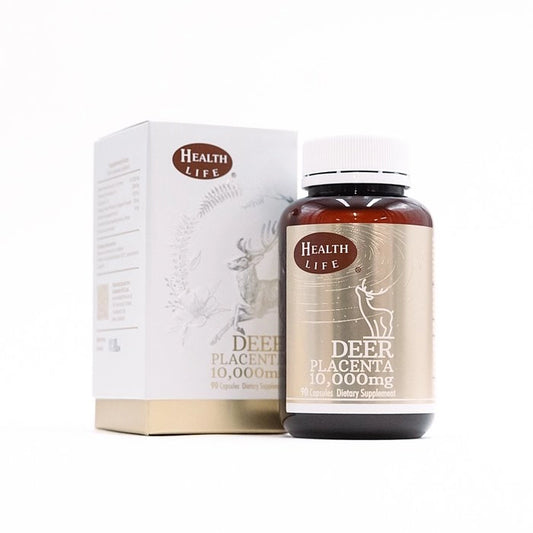
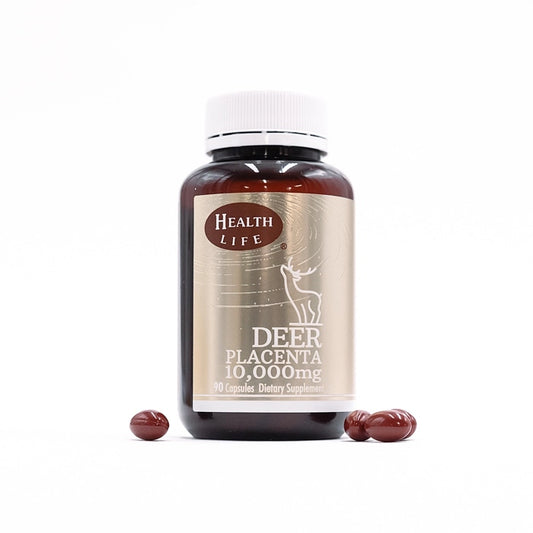
What Is Sheep Placenta? A Guide to New Zealand Sheep Placenta, Different Types and How to Choose
“What exactly is sheep placenta?”
“Why do so many people choose placenta supplements as part of their beauty routine?”
“What is the difference between sheep, horse and porcine placenta?”
“What makes New Zealand sheep placenta different?”
Placenta has long been used as an ingredient in beauty and wellness products.
It can be found in cosmetics as well as in placenta supplements designed to be incorporated into everyday routines.
Among these, sheep placenta refers to placenta derived from sheep.
In New Zealand, where sheep farming has a long history, sheep-derived placenta is also used in dietary supplements. These products have attracted interest from people looking to support their beauty and general wellness routines.
However, when researching placenta supplements, it is easy to come across confusing questions such as, “Which is better: sheep, horse or porcine placenta?”, “What does 25,000mg equivalent mean?”, and “What should I look for when choosing a product?”
In this guide, we explain the basics of sheep placenta, why placenta has attracted attention in the beauty and wellness field, how sheep, horse and porcine placenta differ, what makes New Zealand sheep placenta distinctive, and how to understand placenta content labels.
If you want to understand sheep placenta properly before choosing a supplement, this guide will help you compare your options more confidently.
What Does “Placenta” Mean?
The word placenta refers to the organ that develops during pregnancy and plays an important role in the exchange of oxygen and nutrients between the mother and the developing baby.
In the health food and cosmetics industries, the term “placenta” generally refers to placenta-derived ingredients that have been processed or extracted for use in products.
Animal-derived placenta used in supplements commonly includes:
- Sheep placenta
- Horse placenta
- Porcine placenta
Although all of these are referred to as “placenta,” the animal source is not the only difference.
Processing methods, concentration, ingredient combinations and overall product formulation can also vary from one supplement to another.
It may be helpful to think of “placenta” as a broad ingredient category, with sheep, horse and porcine placenta representing different animal sources within that category.
What Is Sheep Placenta?
Sheep placenta is placenta derived from sheep.
The raw placenta is processed into an ingredient that can be used in dietary supplements and other products.
In Japan, porcine and horse placenta are also widely known, while in countries such as New Zealand, sheep-derived placenta is used in a range of supplements.
New Zealand is particularly well known for sheep farming, and sheep-derived ingredients have long formed part of the country’s agricultural industries.
Some sheep placenta supplements contain placenta as the main ingredient, while others combine it with plant-derived ingredients such as grape seed extract.
For this reason, sheep placenta can be considered one option for people who are interested in incorporating a placenta supplement into a beauty and everyday wellness routine.
What Does Placenta Contain?
Placental tissue naturally contains a variety of components, including proteins, amino acids and peptides.
Components commonly associated with placenta include:
- Proteins
- Amino acids
- Peptides
- Lipids
- Minerals and other trace components
However, placenta used in supplements is not consumed as raw placental tissue.
The material is processed and extracted, meaning that the final composition of a placenta ingredient can vary depending on the source material and manufacturing method.
For that reason, it is useful to look beyond the word “placenta” itself and consider the actual ingredients and formulation of the product you are comparing.
Why Has Placenta Attracted Attention in the Beauty Industry?
Many people first encounter the word “placenta” through beauty products.
Placenta-derived ingredients have been used in cosmetics and beauty-related supplements for many years.
One reason for this continuing interest is that placenta extracts have also been studied from a number of different research perspectives.
Some human studies have investigated the relationship between orally consumed placenta extracts and skin-related measurements.
For example, studies using porcine and horse placenta extracts have examined skin-related parameters in adult women.
This ongoing research interest is one of the reasons placenta has remained a familiar ingredient among people interested in beauty and personal wellness.
However, the placenta extracts used in research can differ in animal source, manufacturing method, dosage and study design.
Results from studies using porcine or horse placenta extracts should not automatically be interpreted as the effects of sheep placenta supplements.
It is more appropriate to understand these studies as part of the broader research background surrounding placenta-derived ingredients.
Why Is Placenta Also Used in Wellness Supplements?
Placenta is not only associated with beauty products. It has also been used for many years in the dietary supplement and wellness market.
As people get older, they often begin paying attention not only to appearance but also to nutrition, daily wellbeing and lifestyle habits.
You may begin thinking:
“I want to pay attention to what I eat as well as what I apply to my skin.”
“I want to think about beauty and wellness as part of the same daily routine.”
“I want to review my everyday habits as I get older.”
For people with these priorities, supplements can be one way to complement a balanced diet and everyday lifestyle.
Placenta supplements are one of the options available, particularly for those who are interested in both beauty and general wellness.
For Those Who Think Beyond Beauty Alone
Placenta is often associated primarily with beauty, but that does not mean it has to be considered only from that perspective.
Many people who choose sheep placenta are interested in maintaining a beauty routine while also paying more attention to their overall lifestyle and daily nutrition.
For this reason, sheep placenta can be considered as one supplement option for those who want to approach beauty and everyday wellness together.
Before Choosing Sheep Placenta, Understand the Difference Between Sheep, Horse and Porcine Placenta
As we have seen, placenta supplements can be made from several different animal sources.
So what exactly is the difference between sheep placenta, horse placenta and porcine placenta?
You may come across questions such as, “Is horse placenta more premium?”, “Does sheep placenta have its own advantages?”, or “How is porcine placenta different?”
In the next section, we will compare sheep, horse and porcine placenta and take a closer look at why some people choose sheep placenta.
What Is the Difference Between Sheep, Horse and Porcine Placenta?
Placenta supplements can be made from several different animal sources, including sheep, horses and pigs.
Although all three are placenta-derived ingredients, many people wonder whether one type is better than another.
The first thing to understand is that the animal source alone does not determine the overall quality of a placenta supplement.
Products can also differ in placenta content, processing methods, formulation and the other ingredients included in the supplement.
With that in mind, let’s look at the basic characteristics of each type.
Sheep Placenta
Sheep placenta is derived from the placenta of sheep.
While porcine and horse placenta may be more familiar to some consumers, sheep-derived placenta is also used in supplements, particularly in countries such as New Zealand.
New Zealand has a long history of sheep farming, with sheep playing an important role in the country’s agricultural industries.
This makes the connection between New Zealand and sheep-derived ingredients relatively easy to understand.
Some sheep placenta supplements focus primarily on placenta, while others combine sheep placenta with additional ingredients such as grape seed extract.
For people who specifically want a sheep-derived placenta supplement or are interested in New Zealand-sourced sheep placenta, it represents a distinctive option within the broader placenta supplement category.
Horse Placenta
Horse placenta is derived from the placenta of horses.
It is used in a variety of beauty-related supplements, drinks and other products, particularly in markets where placenta products are already well established.
You may sometimes see claims suggesting that horse placenta is automatically superior because of its amino acid content or because it is positioned as a premium ingredient.
However, individual products can differ considerably in their raw materials, processing methods, placenta content and overall formulation.
For that reason, the fact that a product uses horse placenta does not by itself mean that it is necessarily superior to every other type of placenta supplement.
For consumers who specifically prefer horse-derived ingredients, however, horse placenta remains one option to consider.
Porcine Placenta
Porcine placenta is derived from the placenta of pigs.
It is used in a wide range of beauty and wellness products and is one of the better-known animal sources of placenta ingredients.
Porcine placenta extracts have also been used in scientific research, which is one reason consumers may encounter information about this type of placenta when researching the subject.
However, a particular porcine placenta extract used in a research study should not be considered identical to every commercially available porcine placenta supplement.
As with sheep and horse placenta, the characteristics of the finished product depend on the actual formulation and manufacturing process.
Sheep vs Horse vs Porcine Placenta
The basic differences can be summarized as follows:
| Type |
Source |
General Characteristics |
| Sheep Placenta |
Sheep placenta |
Used in supplements including products made with New Zealand-sourced sheep placenta |
| Horse Placenta |
Horse placenta |
Used in beauty-related supplements, drinks and other products |
| Porcine Placenta |
Pig placenta |
Widely used in beauty and wellness products and also found in placenta research |
The clearest difference between these three types is simply the animal from which the placenta is derived.
It is therefore better not to assume that sheep placenta is specifically “for beauty,” horse placenta is automatically “higher quality,” or porcine placenta is somehow inferior.
Instead, they should be understood as different animal-derived sources used in placenta products.
Why Do Some People Choose Sheep Placenta?
If sheep, horse and porcine placenta cannot simply be ranked from best to worst, you may wonder why someone would specifically choose sheep placenta.
One reason is the distinctive animal source itself.
Some consumers want to know exactly where the placenta in their supplement comes from rather than simply choosing a product labelled “placenta.”
There is also particular interest in New Zealand products and ingredients associated with the country’s agricultural background.
For consumers looking specifically for a New Zealand-sourced placenta supplement, sheep placenta therefore provides a natural option to explore.
In addition, some products combine sheep placenta with other ingredients commonly used in beauty and wellness supplements, such as grape seed extract.
For this reason, sheep placenta is more than simply “another type of placenta.” It can be an appealing choice for people who want to consider the source of the ingredient as well as the overall formulation of the supplement.
New Zealand and Its Long Association with Sheep
To understand why New Zealand sheep placenta attracts attention, it helps to understand the country’s long relationship with sheep farming.
New Zealand is internationally known for its extensive pasture-based agricultural industries.
Sheep in particular have played an important role in the country’s farming history, supporting industries such as wool and meat production for generations.
Even today, sheep grazing across open pasture remains one of the images most strongly associated with rural New Zealand.
Against this agricultural background, a variety of sheep-derived materials are used in different industries, including ingredients used in sheep placenta supplements.
For consumers who are more familiar with porcine or horse placenta, looking at products from New Zealand introduces another option: sheep-derived placenta.
New Zealand-Sourced Sheep Placenta as an Option
The appeal of New Zealand-sourced sheep placenta is not simply the name “New Zealand” on a product label.
For many consumers, part of the interest comes from the clear connection between a country with a long-established sheep farming industry and a supplement made with sheep-derived placenta.
When choosing a supplement, some people want to know not only what ingredients are included but also where those ingredients come from.
For these consumers, New Zealand-sourced sheep placenta can be an especially interesting option.
Once you begin comparing sheep placenta supplements, however, another question quickly appears:
What does a label such as “25,000mg equivalent” actually mean?
Some sheep placenta supplements are labelled as providing the equivalent of 25,000mg of sheep placenta per capsule.
Does that mean there are physically 25,000mg of placenta inside a single capsule?
Not exactly.
In the next section, we will explain what “placenta equivalent” means and how to interpret these numbers when comparing sheep placenta supplements.
What Does “25,000mg Equivalent” Mean?
When comparing sheep placenta supplements, you may see large numbers such as “25,000mg equivalent.”
At first glance, this can sound as though a single capsule physically contains 25,000mg — or 25g — of placenta.
However, that is not what the label means.
In supplements made with concentrated or processed ingredients, an “equivalent” amount generally refers to the amount of the original raw material represented by the processed ingredient used in the product.
In other words, when a sheep placenta supplement is described as providing 25,000mg equivalent, the figure refers to the equivalent amount of the original sheep placenta represented by the placenta ingredient.
This distinction is important when reading supplement labels.
Why Is the Actual Ingredient Weight Different from the Equivalent Amount?
Raw biological materials naturally contain water and other components.
When they are processed, concentrated or dried for use in supplements, the resulting ingredient can weigh considerably less than the original material from which it was produced.
This is why the physical weight of the ingredient inside a capsule may be much lower than the raw-material equivalent stated on the product.
A simple way to think about it is:
Raw-material equivalent
= the amount of original material represented by the processed ingredient
Therefore, a label stating “25,000mg equivalent” should not be interpreted as meaning that 25,000mg of physical powder or extract has been placed inside one capsule.
Understanding this makes it much easier to compare placenta supplements without being confused by apparently very large numbers.
Check Whether the Amount Is Per Capsule or Per Daily Serving
Another important detail is what the stated amount refers to.
A product may display its placenta equivalent:
- per capsule
- per serving
- per recommended daily intake
These are not necessarily the same thing.
For example, one product may provide its stated amount in a single capsule, while another may require several capsules to reach the amount shown for a daily serving.
For this reason, when comparing products, do not look only at the largest number on the front of the package.
Check how many capsules the figure represents and how it relates to the recommended daily intake.
Does “Equivalent” Mean the Product Is Less Valuable?
No. The use of an equivalent amount does not by itself mean that a supplement is less valuable.
It is simply a way of expressing the relationship between a processed ingredient and the amount of original raw material it represents.
What matters when comparing sheep placenta supplements is understanding what the number means rather than assuming that every milligram figure represents the same type of measurement.
It is also useful to consider the placenta source, the amount represented by the label, the recommended intake and the overall formulation of the product.
Look Beyond Placenta: What Else Is Included in the Formula?
Not every sheep placenta supplement contains placenta alone.
Some products combine sheep placenta with other ingredients to create a broader supplement formula.
One ingredient that may be included alongside sheep placenta is grape seed extract.
This is worth paying attention to because it shows why supplements should not always be compared using only the placenta number printed on the label.
Two products may both be described as sheep placenta supplements while having quite different overall formulations.
What Is Grape Seed Extract?
Grape seed extract is an ingredient made from grape seeds and is widely used in dietary supplements.
Grape seeds naturally contain plant compounds known as polyphenols, including proanthocyanidins.
Polyphenols are naturally occurring compounds found in many plant foods, including fruits, vegetables, tea and grapes.
Because grape seed extract provides a concentrated source of these plant-derived compounds, it is commonly included in supplements designed for people interested in beauty and everyday wellness.
When grape seed extract is combined with sheep placenta, the result is a supplement formula that includes both an animal-derived placenta ingredient and a plant-derived ingredient.
This type of combination can be one point of interest for consumers who prefer a more comprehensive formulation rather than focusing on a single ingredient alone.
What About Vitamin E?
Vitamin E is another nutrient commonly found in beauty and wellness supplements.
It is a fat-soluble vitamin and an essential nutrient required by the human body.
Vitamin E contributes to the protection of cells from oxidative stress.
It can be obtained naturally from foods such as nuts, seeds and vegetable oils, and it may also be included as part of a supplement formulation.
When looking at a sheep placenta supplement that contains additional ingredients, it is therefore useful to consider the complete formula rather than evaluating the product only by its placenta content.
Manufacturing and Quality Management Are Also Worth Checking
When choosing a dietary supplement, the ingredients are only part of the picture.
Manufacturing and quality management are also useful factors to consider.
One term you may encounter when comparing supplements is GMP.
GMP stands for Good Manufacturing Practice and refers to systems and procedures used to help ensure that products are consistently manufactured and controlled according to established quality requirements.
If a supplement is described as being manufactured in a GMP-certified facility, this provides additional information about the environment and quality-management framework in which the product is made.
GMP certification does not mean that a supplement has been proven to provide a particular health or beauty effect.
Instead, it relates to manufacturing and quality-management practices.
How Should You Think About Placenta Equivalent and the Overall Formula?
When comparing sheep placenta supplements, it can be tempting to focus on one large number.
However, the placenta equivalent is only one part of the product.
For example, a supplement that provides 25,000mg equivalent of sheep placenta per capsule and also contains ingredients such as grape seed extract offers a different formulation from a product containing placenta alone.
This does not mean that one formula is automatically better for everyone.
Rather, it means that you can compare products according to what you personally want from a supplement.
If you are looking for sheep placenta, you may want to consider not only the placenta equivalent but also the origin of the placenta, the additional ingredients, the recommended intake and the manufacturing information available for the product.
Looking at the complete formulation makes it easier to understand what distinguishes one sheep placenta supplement from another.
When Is the Best Time to Take a Sheep Placenta Supplement?
Sheep placenta supplements are dietary supplements rather than medicines, so there is not necessarily one specific time of day that applies to every product.
The first step is to follow the recommended intake and directions provided on the product label.
If no particular time is specified, many people find it easier to incorporate supplements into an existing daily routine, such as around breakfast or dinner.
The practical goal is to choose a routine that is easy to remember and maintain.
Taking more than the recommended amount is not a shortcut to better results, so follow the directions provided with the product.
What Should You Know Before Taking Sheep Placenta?
Sheep placenta supplements are sold as dietary supplements rather than medicines.
Before using a product, check the ingredient list, recommended intake and any directions or precautions provided on the label.
What If You Have Concerns About Ingredients or Your Individual Circumstances?
Sheep placenta supplements contain ingredients derived from sheep, and products with more complex formulations may contain additional ingredients as well.
If you have food allergies or sensitivities, check the full ingredient list before use.
If you are pregnant or breastfeeding, taking medication, receiving medical treatment or have specific concerns about using dietary supplements, consider speaking with an appropriate healthcare professional before use.
As with other dietary supplements, the basic approach is simple: check the information provided with the specific product and use it according to the directions.
Are Dietary Placenta Supplements the Same as Medical Placenta Products?
When researching placenta online, you may encounter information about placenta used in medical settings as well as placenta used in dietary supplements.
These should not be treated as the same type of product.
Placenta supplements sold as foods and placenta products used for medical purposes can differ in their source materials, manufacturing methods, intended use and regulatory status.
For this reason, medical uses or effects associated with a particular medical placenta product should not be applied directly to a sheep placenta dietary supplement.
The sheep placenta discussed in this article refers to placenta used as an ingredient in dietary supplements for everyday beauty and wellness routines.
Who Might Consider a Sheep Placenta Supplement?
Sheep placenta may be an option to consider for people who:
- want to maintain a beauty routine as they get older
- are interested in both beauty and everyday wellness
- want to pay attention to nutrition as well as external skincare
- are specifically interested in sheep-derived placenta
- are looking for New Zealand-sourced sheep placenta
- want to compare products based on clearly stated placenta equivalent amounts
- are interested in formulas that combine placenta with plant-derived ingredients
In particular, for people who begin thinking more broadly about both beauty and everyday wellness as they get older, sheep placenta is one of the supplement ingredients they may encounter when exploring their options.
Thinking About Beauty and Wellness as You Get Older
The way we think about beauty often changes with age and lifestyle.
Skincare remains important, but many people also begin paying more attention to diet, nutrition and their everyday habits.
In your 30s, 40s, 50s and beyond, beauty and general wellbeing may increasingly feel like parts of the same overall lifestyle rather than completely separate concerns.
For those exploring this broader approach, learning about sheep placenta provides another option alongside the horse and porcine placenta products that may already be familiar.
Five Things to Check When Choosing a Sheep Placenta Supplement
After looking at sheep placenta from several different perspectives, the main points to compare can be simplified into five areas.
| What to Check |
What to Look For |
| Source |
Which animal the placenta comes from and information about its origin |
| Placenta Equivalent |
The stated equivalent amount and whether it is per capsule, serving or daily intake |
| Overall Formula |
Whether the product contains placenta alone or includes additional ingredients |
| Manufacturing & Quality Management |
Information about the manufacturer, manufacturing standards and quality-management practices |
| Everyday Practicality |
Recommended intake, capsule format, quantity and whether the product fits easily into your routine |
Looking at these five areas makes it easier to compare sheep placenta supplements as complete products rather than judging them by one number on the label.
Looking for New Zealand-Sourced Sheep Placenta with a 25,000mg Equivalent?
As we have explored throughout this guide, sheep placenta supplements can differ in their ingredient source, placenta equivalent, additional ingredients and overall formulation.
For people specifically interested in New Zealand-sourced sheep placenta or those who prefer products with clearly stated placenta equivalent amounts, these details can provide a useful starting point for comparison.
A formula that combines sheep placenta with ingredients such as grape seed extract also offers a different approach from a placenta-only supplement, bringing animal-derived and plant-derived ingredients together in a single product.
If your preference is:
- sheep-derived rather than horse or porcine placenta
- New Zealand-sourced sheep placenta
- a clearly stated placenta equivalent
- a formula that includes additional ingredients such as grape seed extract
- manufacturing and quality-management information that can be checked
then a New Zealand-sourced sheep placenta supplement providing 25,000mg equivalent per capsule may be worth considering when comparing your options.
Conclusion: Understanding Sheep Placenta Helps You Make a More Informed Choice
Sheep placenta is placenta derived from sheep and processed for use in products such as dietary supplements.
While porcine and horse placenta may already be familiar to many people, sheep-derived placenta provides another option, particularly for those interested in products associated with New Zealand’s long-established sheep farming industry.
Placenta has been used for many years in the beauty and wellness market, but choosing a supplement involves more than simply deciding between sheep, horse and porcine placenta.
Understanding where the placenta comes from, what the stated equivalent amount means, how the product is formulated and what manufacturing information is available makes it easier to see how one supplement differs from another.
For those interested in New Zealand-sourced sheep placenta, a product providing 25,000mg equivalent per capsule and combining placenta with ingredients such as grape seed extract represents one distinctive formulation to consider.
As beauty and everyday wellness become increasingly connected with the way we think about our lifestyle, sheep placenta is one of the supplement options worth getting to know.
This article provides general information about sheep placenta and dietary supplements. It is not intended to diagnose, treat, cure or prevent any disease, nor does it guarantee any specific health or beauty benefit.